 how-to
How to Request a Solar System Design Quote Step by Step
Quick Summary
To request a solar system design quote, gather your last 12 months of electric bills and roof details, then send the same written request to at least two installers. Include roof age, material, orientation, shade hours, and whether you want battery storage. Compare proposals on production modeling, total price, warranties, and who handles permits.
- Collect your last 12 months of electric bills, including kWh totals, before contacting installers.
- Note roof age, material, leaks, slope directions, and shade hours in your request.
- Send the same template to at least two providers so their quotes can be compared fairly.
- Ask for the production modeling report behind any estimated annual kWh figure.
- Reject any workmanship warranty shorter than 10 years and any quote without a total cash price.
Table of Contents
- Gather Your Electricity Bills and Roof Details Before You Call
- What to Include in a Solar Quote Request
- Checking a Solar Proposal Checklist Before You Sign
- How to Make a Solar Quote Comparison Fair and Useful
- Using a Solar Quote Template to Keep Requests Consistent
- Send Your Request and Book Your Free Audit
- Frequently Asked Questions
How to Request a Solar System Design Quote Step by Step
Last Updated: November 4, 2026
Gather Your Electricity Bills and Roof Details Before You Call
A useful solar system design quote starts with paperwork you may already have.
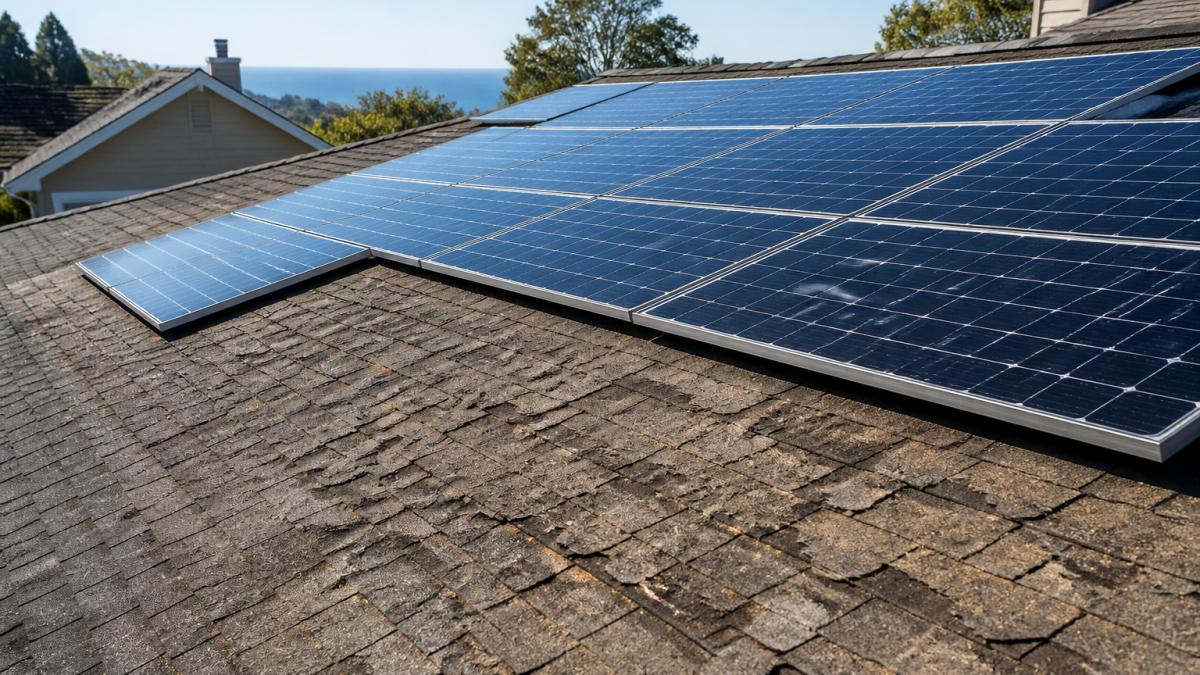
Your roof matters just as much. Note its age, material (asphalt shingle, tile, or metal), any leaks or worn spots, which direction each slope faces, and whether trees or neighboring buildings cast shade.

Keep these items in one folder, paper or digital:
- Twelve months of electric bills, including the kilowatt-hour (kWh) totals
- Photos of the roof from the ground or from a safe vantage point
- The age of your roof and any recent repair records
- Your utility account number and service address
What to Include in a Solar Quote Request
A complete request lets an installer produce a design you can compare; a vague request produces a vague estimate. Include enough detail that two providers working from the same information would reach similar conclusions.
Information About Your Roof and Site
Describe the roof clearly: approximate square footage, number of stories, and pitch if you know it. Mention skylights, vents, or obstructions, and whether you plan to replace the roof soon, since that timing affects whether panels should go on now.
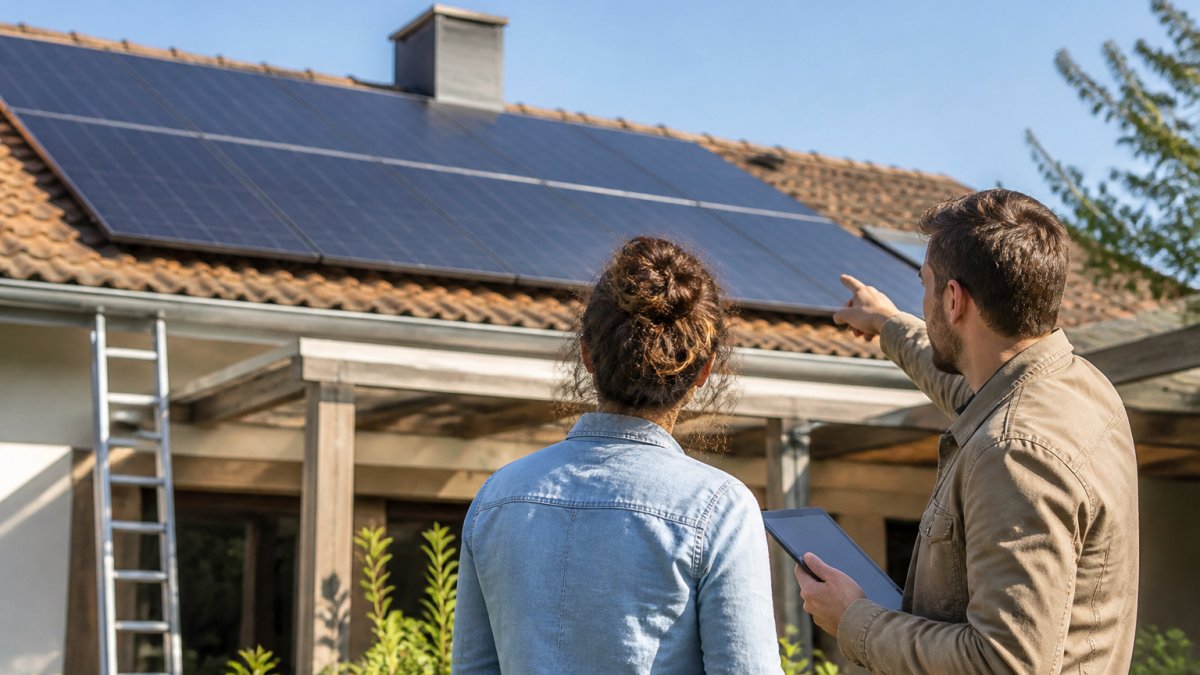
Shading deserves a direct answer. Tell the provider which hours of the day your roof gets shade, since partial shade changes the design.
Information About Your Energy Use
Share your bills and any plans that will change your usage.
Ask whether the design includes battery storage. Batteries are optional for many grid-tied homes, and you should know whether a quote includes one or treats it as an add-on.
The article lists the core details an installer needs, along with the checks that matter most for comparing designs.
| Item | Value | Note |
|---|---|---|
| Electric bills to gather | Last 12 months | Shows usage and drives system size |
| Roof age and material | Asphalt, tile, or metal | Note age, leaks, and worn spots |
| Minimum warranty length | 10 years | Workmanship warranty shorter than this is a red flag |
| Shade disclosure | Hours of shade per day | Partial shade changes the design |
| Production estimate | kWh per year | Ask for the modeling report behind it |
| Quotes to compare before signing | At least two | Use the same template for every provider |
Checking a Solar Proposal Checklist Before You Sign
Once you receive proposals, check them against a short list before you commit. A proposal that is hard to read or leaves out key details is a warning sign on its own.
The core checklist
Confirm that each proposal includes:
- The system size in kilowatts (kW) and the number of panels, with panel make and model
- The inverter make, model, and type (string, microinverter, or hybrid)
- The expected annual energy production in kWh, and the modeling tool used to produce it
- The total cash price before and after any incentives, itemized by equipment, labor, permitting, and financing fees
Audit the production number
Do not accept a production estimate without the modeling report. Ask the provider for the report from whichever modeling tool they use. It should show the array layout, shade analysis, azimuth and tilt of each roof plane, and assumed soiling and degradation losses.
Watch out: proposals that quote only a monthly payment with no total cost, or that rely on savings estimates you cannot trace back to your bills, are the most common source of post-installation disputes.
Spot hidden fees and inflated incentives
Read the pricing page carefully for line items that are easy to miss:
- Dealer fees on financed systems, which are often built into the APR
- Permit and inspection fees listed separately from the install price
- Utility interconnection fees and any meter upgrade charges
- Roof penetration or structural reinforcement charges
Check the interconnection and permitting language
A proposal that does not name who files the interconnection application with your utility is incomplete. Ask whether the price includes the application fee, whether the provider has completed projects in your utility's territory, and what happens if the utility requires a service panel upgrade, which can add thousands of dollars and is frequently excluded.
Red flags that should end the conversation
- Production estimates materially above what the modeling report shows
- No modeling report available on request
- A monthly payment quoted without a total cash price
- A savings estimate that does not reconcile to your last 12 months of bills
How to Make a Solar Quote Comparison Fair and Useful
Comparing quotes only works when the inputs match. Use these questions to judge which local installers are reliable enough to include. Give every provider the same bills, roof details, and questions, then compare the designs, not just the bottom-line price. Quotes differ less on hardware and more on assumptions, utility rate escalation, panel degradation, system life, and shade modeling.
Build a side-by-side comparison sheet
Put every quote into one spreadsheet with these rows, one column per provider:
- System size (kW) and panel count
- Panel model, wattage, and efficiency
- Inverter type (string vs. microinverter) and model
- Estimated first-year production (kWh)
Normalize the production estimate
Ask each provider what modeling tool they used and whether the design accounts for shade from trees, chimneys, and adjacent structures. A quote that lists production without a modeling tool behind it is a guess.
Compare financing on an apples-to-apples basis
If you are financing, the cash price is not the number to compare, the total paid over the loan term is.
Negotiate from the comparison, not from the sticker
Once quotes are normalized, you have leverage. Common negotiation levers include:
- Asking a higher-priced provider to match a lower quote on the same equipment
- Requesting the cash price instead of the financed price, then arranging your own financing
- Asking for a roof-replacement contingency in writing if your roof is near end of life
- Requesting the production modeling report as a condition of signing
Do not negotiate on price alone. Find direct answers about quotes, financing, and privacy. A provider who cuts price by cutting the panel tier, the inverter, or the workmanship warranty has not given you a better deal.
Score the explanation, not just the number
Ask each provider to walk you through their design in plain language: why this array size, why this inverter, why this battery. Learn more about getting transparent, comparable solar quotes.
Using a Solar Quote Template to Keep Requests Consistent
A simple template keeps your requests identical across providers. Copy the block below into an email or document and fill in the blanks.
Solar System Design Quote Request Name: [your name] Service address: [address] Roof type and age: [e.g., asphalt shingle, 12 years old] Roof orientation and shade hours: [e.g., south-facing, shaded 3-5 p.m.] Monthly electric usage (last 12 months): [attach bills] Average monthly bill: [$ amount] Planned changes to usage: [e.g., electric vehicle next year] Battery storage wanted: [yes / no / quote both] Timeline: [when you want installation] Please include: system size (kW), annual production (kWh), total price, payback estimate, and permitting responsibilities.
Send the same template to each provider. Identical requests make the resulting quotes far easier to compare.
Send Your Request and Book Your Free Audit
You now have what you need to start. Gather your bills and roof details, complete the template, and submit it. Solar Power Auditing offers a no-obligation, free home solar audit that produces a customized system design and a written quote with projected savings, based on your roof and electric bills. See how the process works from submission to installation.
Frequently Asked Questions
What information do I need to request a solar system design quote?
Have your last 12 months of electric bills ready, since they show your usage patterns and seasonal peaks. Include your roof age, material, and approximate orientation, plus any known shading from trees or nearby buildings. Note your address, your utility provider, and whether you already have any battery or backup equipment. Providing complete information lets the designer produce a system sized to your actual consumption rather than a generic estimate, and it reduces the number of follow-up questions before a written quote can be prepared.
Is a solar system design quote free?
A solar system design quote from Solar Power Auditing is a no-obligation, free home solar audit. The audit includes a customized system design and a written quote with projected savings based on your roof and electric bills. You are not required to buy anything to receive it. Be cautious with any provider that charges for a basic design but waives the fee only after you sign a contract, and ask directly whether the quote carries any obligation before you share personal information.
What should a solar proposal include?
A complete solar proposal should list system size in kilowatts, panel count and model, inverter type, and expected annual production. It should show projected savings with the assumptions behind them, the total installed price, any financing terms and their total cost, and the warranty terms for panels, inverter, and workmanship. It should also name the licensed installer responsible for the work, explain how permits and utility interconnection are handled, and state the expected timeline from signing to activation.
How can I compare solar quotes from different installers?
Compare quotes on the same basis: identical system size, equipment brands and warranties, and the same assumptions about electricity rates and production. Convert every proposal to total cost after incentives and to projected savings over the same number of years. Check whether the design is based on a site assessment or a rough estimate, and whether the quote includes roof work, permits, and monitoring. A quote that is far lower than the others often leaves out an important cost or uses optimistic production figures.