 how-to
How to Decide if Solar Is Worth It With an Old Roof
Last Updated: October 30, 2026
Quick Summary
Old roof solar is worth it only if your roof has enough remaining life to outlast the panels, so check roof age and condition first. A roof with 10+ years left is generally a green light, while under 5 years means replace the roof first.
- Remaining roof life is how many years a roof can still protect your home before replacement.
- Asphalt shingles typically last 20-25 years, while metal and tile roofs last 40-50 years.
- Under 5 years of roof life left, replace the roof first because reset costs exceed early-install benefits.
- Ask for the detach-and-reset quote in writing before signing the original solar contract.
- Wood shake is a poor solar candidate due to sealing difficulty and limited remaining life.
Table of Contents
- Start With Roof Age and Remaining Roof Life
- Should I Replace My Roof Before Installing Solar Panels?
- Roof Lifespan for Solar Panels: Matching Two Timelines
- Solar Panel Removal and Reinstallation Cost if You Reroof Later
- Solar Savings Payback Period on an Older Roof
- Book Your Free Home Solar Audit Before You Sign Anything
- Frequently Asked Questions
Start With Roof Age and Remaining Roof Life
If you're wondering about old roof solar and whether it's worth it, the answer usually comes down to one number: how many years that roof has left. If the roof fails first, you pay to take the panels off and put them back on.
Remaining roof life is how many years a roof can still protect your home before replacement. A roof at year 18 is a very different solar candidate than one at year 5.
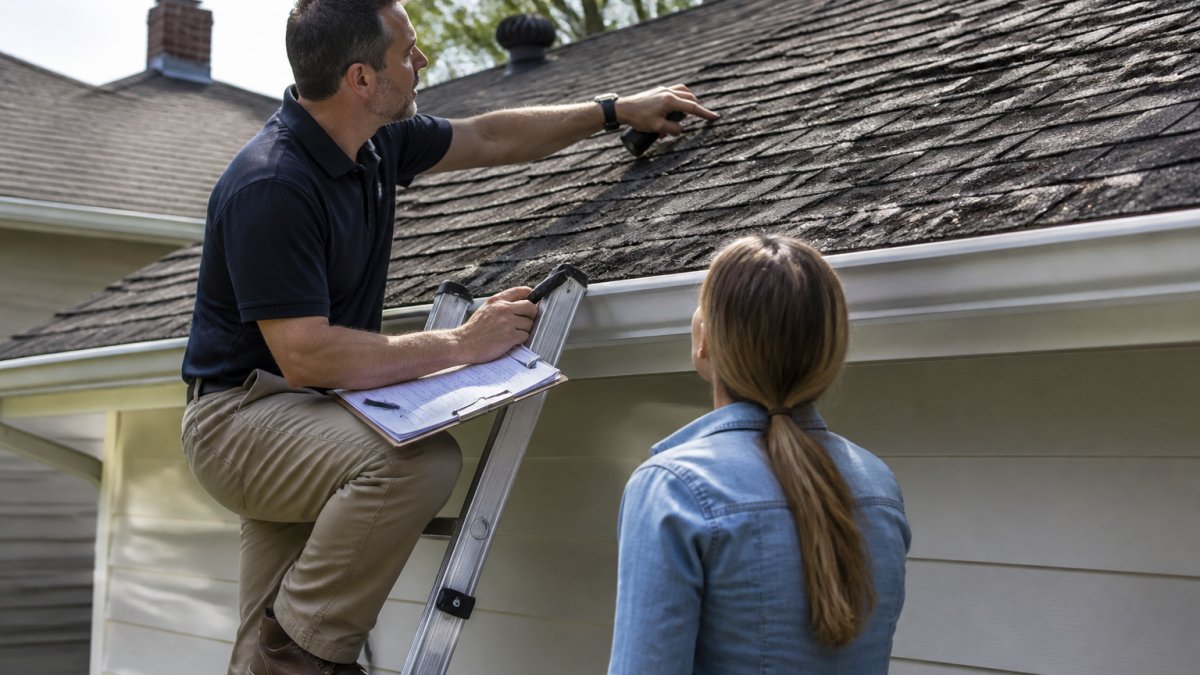
How to Read Your Roof's Condition and Warning Signs
Walk outside and look up. Then check these warning signs:
- Curling, cracked, or missing shingles
- Granules collecting in gutters
- Sagging spots or soft decking underfoot
- Water stains on ceiling or attic boards
- Rusted or loose flashing around vents and chimneys
- Daylight showing through the roof boards
Any one of these means a closer look before solar. Two or more usually means repair or replacement comes first.
Should I Replace My Roof Before Installing Solar Panels?
Replacing a roof with limited life left before installing panels can avoid the cost of removing and reinstalling the system later.
New panels on a dying roof is the most expensive mistake in home solar. Settle the roof question first.
That's why we offer savings toward replacement when an older roof needs work before panels go up, with one licensed local installer handling both the roof and the solar. You can see real home solar installs on tile and shingle roofs to judge how panels sit on an older surface.
Roof Lifespan for Solar Panels: Matching Two Timelines
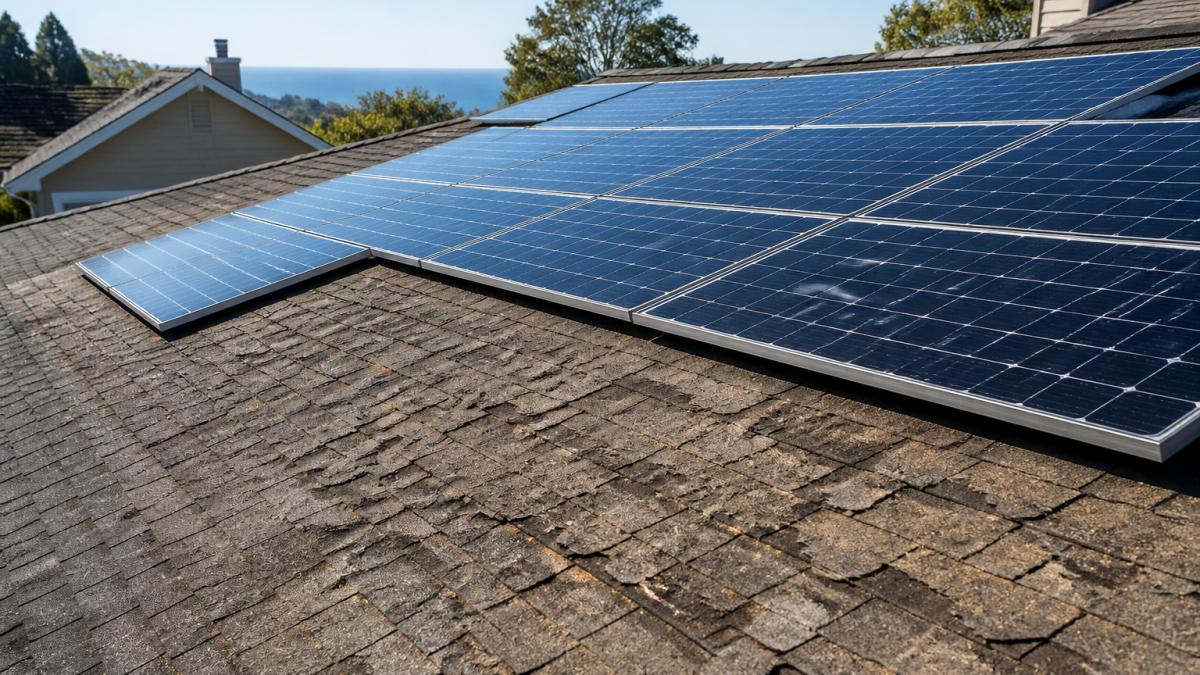
Roofs do not all share that timeline. The core question is not whether solar lasts long enough, it is whether your specific roof will outlast the panels mounted on it.
The two timelines, side by side
| Roof Type | Typical Lifespan | Solar Fit | Attachment Notes |
|---|---|---|---|
| Asphalt shingles | 20-25 years | Good if 10+ years remain | Standard penetrative mounts with flashing; easiest and cheapest to reset |
| Metal (standing seam) | 40-50 years | Excellent | Clamp-on mounts avoid penetrations; confirm seam profile and gauge |
| Metal (exposed fastener) | 30-45 years | Good | Penetrative mounts with gasketed fasteners; watch for fastener wear |
| Tile (clay/concrete) | 40-50+ years | Excellent, needs careful mounting | Tile hooks or replacement tiles; breakage risk is the main cost driver |
| Wood shake | 20-30 years | Poor | Hard to seal, fire and decay concerns, limited mounting options |
| Flat/low-slope membrane | 15-25 years | Fair | Ballasted or non-penetrating mounts; membrane age matters most |
Why the mismatch is expensive
Detach-and-reset costs then hit on top of the reroof bill, not instead of it. Matching timelines up front is the cheapest way to avoid paying for the same roof twice.
A practical decision framework
Instead of relying on a single age cutoff, work through four questions for your roof material:
Material-specific watch-outs
- Tile and metal roofs need special mounting hardware. A general roofer without solar experience can crack tiles or void the panel warranty. Confirm the installer has done your material before.
- Wood shake is a poor solar candidate because sealing penetrations reliably is difficult and the roof itself may not have the remaining life to justify the project.
- Flat membrane roofs should be evaluated on membrane age first; ballasted mounts avoid penetrations but still require the membrane to hold up for the panel's life.
Solar Panel Removal and Reinstallation Cost if You Reroof Later
Removing and reinstalling a solar system is a separate job from the original install, and it adds cost when panels go on a roof that still has life left.
What a detach-and-reset actually involves
A proper removal and reinstallation is not just unscrewing panels. The scope typically includes:
- System shutdown and electrical disconnect, the inverter is de-energized, circuits are isolated, and the utility may need to be notified depending on your interconnection agreement.
- Panel removal and labeled storage, panels are heavy, fragile, and must be stored out of weather, adding cost.
- Racking and mounting hardware removal, rails, clamps, and standoffs come off, exposing every roof penetration.
- Roof repair at penetrations, the roofer must flash, seal, or replace decking and underlayment at each mount point before the new roof goes down.
- Reinstallation and re-flashing, new standoffs, sealant, and flashing at every penetration.
- New permits and inspection, many jurisdictions require a new electrical permit and re-inspection even if the equipment is unchanged.
- System recommissioning, the inverter is restarted, monitoring reconnected, and performance verified.
What drives the price up or down
The total depends on more than system size. The biggest cost levers are:
- System size and panel count, more panels means more mounts, wire, and labor hours.
- Roof material and pitch, tile and steep roofs take longer and carry higher breakage risk; asphalt shingle is simplest.
- Mounting type, penetrative mounts require flashing and roof repair; ballasted systems on flat roofs change the scope.
- Storage and staging, trucking panels to a warehouse and back adds handling cost.
- Permitting and inspection fees, these vary by jurisdiction and are often passed through at cost.
- Whether the original installer is doing the reset, a company that knows the system can often work faster than a new crew reverse-engineering someone else's layout.
The comparison that matters
Running both scenarios side by side can help you compare solar now plus a later reset against reroofing first and installing solar on a fresh surface.
Solar Savings Payback Period on an Older Roof
Payback period is the time it takes your electricity savings to equal what you paid for the system (Will I Save Money with Solar Energy?). A shorter payback means solar is worth more to you.
An older roof can lengthen the payback period. Here's why:
- You may need a partial reroof soon after install
- Removal and reinstallation costs can reduce savings
- A failing roof can force an early, unplanned expense
Run your own numbers before you commit.
Book Your Free Home Solar Audit Before You Sign Anything
You don't have to guess whether your roof can carry solar. Get straight answers about free solar quotes, roofs, installation, financing and privacy. A free home solar audit gives you a straight answer: we tell you about your roof and bill, then build a custom design and a written quote with projected savings. See how the free solar audit works.
Here's what the audit covers:
- Roof age, condition, and remaining life
- A system design sized to your usage
- Projected savings based on your electric bill
- A clear recommendation: solar now, or roof first
We send your project to one licensed local installer, never a list, and handle the paperwork, permits, and installation. We also offer savings toward replacement for older roofs.
Ready to move? Get your free home solar quote and a solar advisor will contact you.
Frequently Asked Questions
How old is too old for a roof to install solar panels?
There is no single cutoff. Roof condition and remaining service life matter more than age alone, so have an aging roof inspected before signing a solar contract. A roof with curling shingles, granule loss, or active leaks should be repaired or replaced first, because panel removal and reinstallation later adds cost and hassle you can avoid by sequencing the work correctly.
Can solar panels damage an aging roof?
Panels themselves do not damage a sound roof, but installation involves roof penetrations for mounting hardware, and each penetration is a potential leak point if flashing is done poorly. On an aging roof with brittle shingles or soft decking, the risk rises. A roof inspection before installation can help confirm structural condition.
Will solar savings pay for a roof replacement first?
Rarely on their own. A roof replacement is a large upfront cost, while solar savings accrue gradually through lower electricity bills. The smarter way to think about it is total cost of ownership: replacing the roof first avoids a future removal and reinstallation bill for the panels, and it protects your solar investment for its full system lifespan. Ask for a written quote that shows projected savings and payback period side by side with roofing costs.
How much does it cost to remove and reinstall solar panels for a roof replacement?
Costs vary by system size, roof pitch, and labor rates in your area, so get itemized quotes rather than estimates. Because pricing depends on your specific roof and system, ask your installer for a written breakdown before you commit, and confirm who covers the work if the roof fails under warranty.
The roof question decides whether solar pays off for you. Don't let a sales pitch skip it. Solar Power Auditing gives you a no-obligation audit, a written quote with projected savings, and one licensed installer to handle the whole job, roof included. Get started with Solar Power Auditing and find out if your roof is ready for solar.