 blog
7 Questions to Find Reliable Local Solar Installers in 2026
Last Updated: November 2, 2026
Quick Summary
Finding reliable local solar installers means verifying the license number on the written proposal against the state contractor licensing database and confirming active general liability and workers' compensation insurance for the same legal entity that signs your contract. Ask each company who pulls the permits, whether installers are employees or subcontractors, and for a written timeline.
- Verifying a licensed contractor takes about fifteen minutes and prevents the most expensive solar mistakes.
- Ask for a certificate of insurance showing general liability and workers' compensation for the same entity as your contract.
- Get a cash price for every bid even if you plan to finance, since it compares cleanly across companies.
- High-pressure same-day discounts, no physical local address, and refusal to share a license number are red flags.
- A quote showing only a monthly payment and no cash price is designed to prevent comparison.
Table of Contents
- Why Local Solar Installers Beat National Sales Networks
- Solar Installer Questions to Ask Before You Sign Anything
- How to Verify Licensed Solar Contractors and Insured Installers
- Solar Installation Quote Comparison: Normalize Every Bid
- Solar Company Red Flags That Should End the Conversation
- Book Your Free Home Solar Audit Before You Compare Quotes
- Frequently Asked Questions
Why Local Solar Installers Beat National Sales Networks
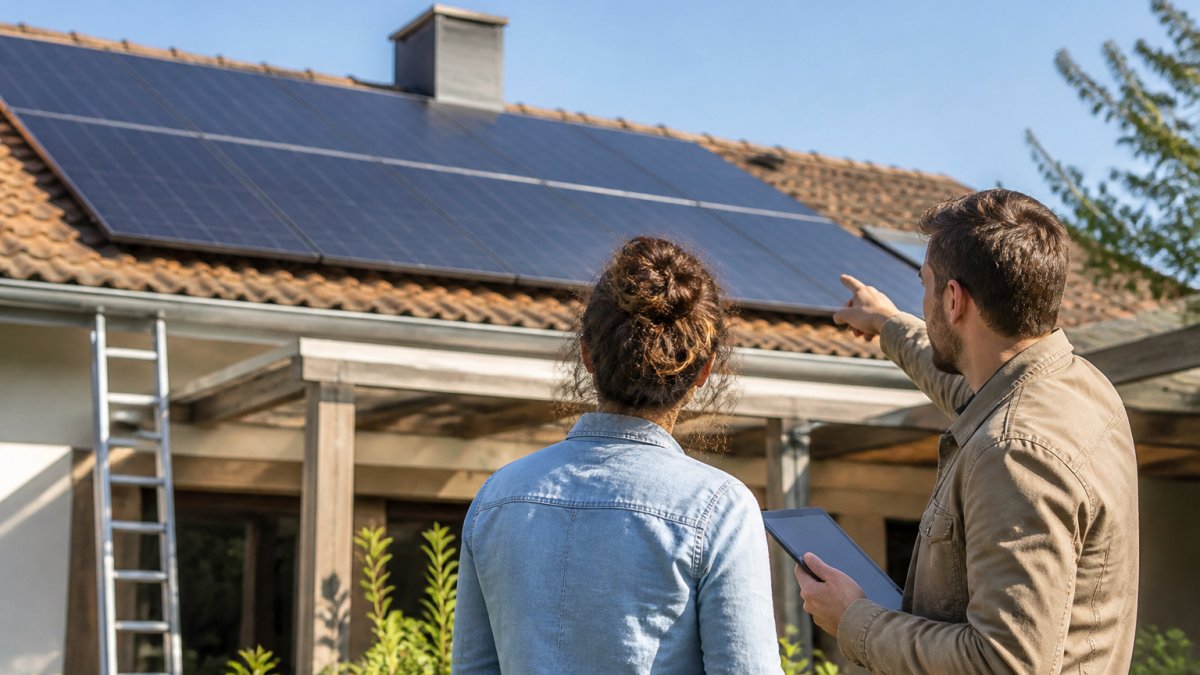
Finding reliable local solar installers starts with understanding who actually shows up on your roof. A local solar installer is a licensed contractor based in your service area who designs, permits, and installs residential solar systems with their own crews. Homeowners often get burned by call centers that subcontract everything. The pattern repeats: a polished sales pitch, a rushed site assessment, and a crew nobody can identify.
Local Presence and Service Area Matter More Than Ads
A company's service area tells you whether they can return in a week or a month. Local presence means the same team that installed your solar system also handles service calls and warranty work. Ask for the physical address and the counties they cover.
What Installation Experience and Customer Reviews Reveal
Years in business and completed installs in your county matter more than star ratings alone. See it on the roof with real home solar installs from Gainesville to Miami. Read customer reviews for patterns: repeated complaints about post-installation support are a warning.
Solar Installer Questions to Ask Before You Sign Anything
The right solar installer questions to ask separate a professional operation from a sales machine. Start with these:
- Who pulls the permits, and who handles utility interconnection?
- Are your installers employees or subcontractors?
- What workmanship warranty do you offer, and for how long?
- What happens if my roof needs replacement first?
- Can you show me a written quote with projected energy production?
- How long from contract to flipped switch?
- Who services the system if it underperforms?
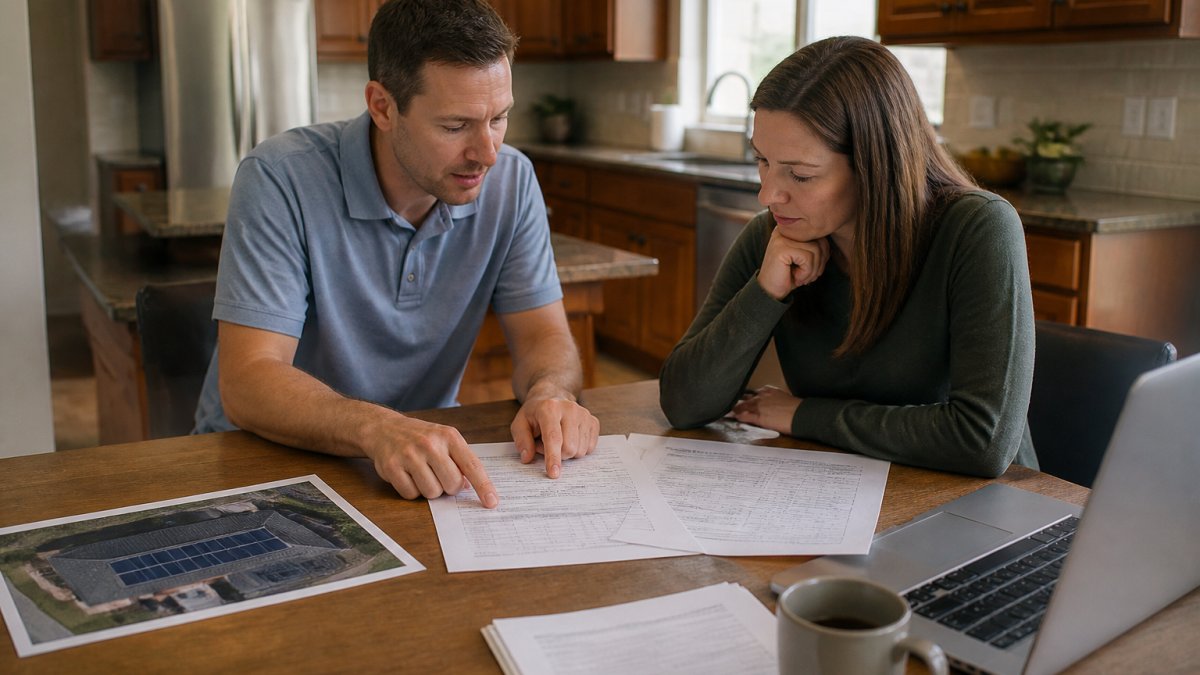
Watch out: a verbal promise about timeline means nothing. Get the installation timeline in writing.
How to Verify Licensed Solar Contractors and Insured Installers
Verifying licensed solar contractors takes about fifteen minutes and prevents the most expensive mistakes in a solar project. Solar work is typically licensed under a general contractor, electrical, or specialty solar classification, and license records are generally public.
Watch out: a sales representative's business card is not proof of licensure. The license must belong to the contracting entity that will sign your agreement and pull the permit, and a surprising number of complaints trace back to a license that was active for a different company name.
Insurance is the second check, and it has two parts. Ask for a certificate of insurance showing general liability coverage and workers' compensation coverage, and confirm the certificate lists the same legal entity as your contract. General liability protects your home if the crew damages roofing, wiring, or landscaping.
Permitting and utility interconnection are where credentials get tested in practice. Ask who pulls the permit and who submits the interconnection application to your utility. In most jurisdictions the licensed contractor of record must pull the electrical permit, and the name on the permit should match the name on your contract.
Finally, confirm the license and insurance are current at contract signing, not just at the sales appointment. Licenses lapse and policies renew; ask for an updated certificate dated within the current policy period and keep copies with your contract. state contractor license lookup can point you to the right state board if you are unsure which agency regulates solar contractors where you live.
Solar Installation Quote Comparison: Normalize Every Bid
A solar installation quote comparison only works when every bid describes the same system, the same scope, and the same financial terms. Normalize before you compare, and do it in writing. How to Get Transparent Solar Quotes as a Homeowner walks through getting transparent, comparable quotes first.
Start with the physical system. Record system size in kilowatts (DC), estimated first-year production in kilowatt-hours, panel make and model, inverter type (string, microinverter, or hybrid), battery make and capacity in kWh, and mounting hardware.
Next, normalize the money. Dealer fees are the hidden variable, a low advertised rate often comes with a fee folded into the principal, which raises the cash-equivalent price (Issue Spotlight: Solar Financing).
Watch out: a quote that shows only a monthly payment and not a cash price or loan terms is designed to prevent comparison. Ask for the cash-equivalent price in writing before you evaluate anything else.
Then compare scope and exclusions line by line. Confirm whether each bid includes permits, utility interconnection fees, main panel upgrades, trenching, roof penetrations and flashing, monitoring hardware, and removal and reinstallation if the roof is replaced. Ask what is excluded, critter guard, snow guards, EV charger conduit, and service panel relocation are common exclusions that add cost later.
Finally, read the contract for red flags before signing. Look for a clear right to cancel, a stated installation timeline with remedies for delay, a lien waiver or lien release provision, an assignment clause that lets the company sell your contract, and a production guarantee with a defined remedy if the system underproduces.
| Quote Element | What to Confirm | Why It Matters |
|---|---|---|
| System size | kW (DC) and first-year kWh estimate with assumptions | Drives savings math and cross-bid comparability |
| Equipment | Panel, inverter, and battery make/model and capacity | Affects warranty, output, and replacement cost |
| Cash price | Cash-equivalent price before financing | The only clean cross-company number |
| Financing | APR, term, monthly payment, total paid, dealer fees | Changes total cost dramatically |
| Lease/PPA | Escalator, term, buyout, transfer terms | Determines long-term cost and home-sale risk |
| Scope | Permits, interconnection, panel upgrade, trenching, flashing | Prevents surprise add-ons |
| Exclusions | Critter guard, snow guards, EV conduit, panel relocation | Common hidden costs |
| Warranty | Equipment, production, and workmanship years and servicer | Protects roof and array long term |
| Contract | Cancellation right, timeline, lien waiver, assignment, production remedy | Determines your legal and financial exposure |
| Timeline | Written install date range and delay remedies | Prevents open-ended waits |
Solar Company Red Flags That Should End the Conversation
Certain solar company red flags should stop the process cold. High-pressure same-day discounts, no physical local address, and refusal to share a license number top the list. So does a quote that hides dealer fees inside financing.
Other warning signs: subcontracting without disclosure, no workmanship warranty, and vague answers about who handles permits. If a rep dodges the question about post-installation support, walk away. A company that won't put terms in writing won't honor them later.
Book Your Free Home Solar Audit Before You Compare Quotes
A solar audit gives you honest numbers before any salesperson gets involved. Tell us about your roof and electric bill, and we deliver a custom design and written quote with projected savings. From first form to flipped switch explains exactly what the free solar audit involves. Your project details go to one licensed local installer, never a list.
Ready to start comparing with real data? Get your free home solar quote and let us walk you through your options.
Comparing installers is easier when you start with an honest assessment instead of a sales pitch. Solar Power Auditing provides a no-obligation free home solar audit, a customized system design based on your roof and energy usage, and written quotes with projected savings. We handle all paperwork, permits, and installation through one licensed local installer, and we can help with older roofs by offering savings toward replacement. Get started with Solar Power Auditing and see whether solar truly makes sense for your home.
Frequently Asked Questions
How do I find reliable local solar installers near me?
Start with installers who have a physical local presence and a service area you can verify. Ask how long they have operated in your region, request three recent local references, and check their license and insurance before any site visit. Then compare at least three written quotes that show system size, equipment options, and projected energy production. A free home solar audit from Solar Power Auditing gives you a customized system design and written quote with projected savings, so you have a baseline to compare every local solar installers' bid against.
What should a solar installation quote comparison include?
A fair solar installation quote comparison lines up the same details across every bid: system size in kilowatts, panel and inverter models, battery capacity if included, projected annual energy production, warranty coverage for equipment and workmanship, and what permits and utility interconnection cost. Ask each company to show gross project cost and net cost after incentives separately. If one quote is missing line items another includes, treat the gap as a question, not a discount.
What solar company red flags should make me walk away?
Watch for high-pressure same-day discounts, quotes given without a site assessment, requests for large upfront cash payments, and unwillingness to put warranty terms in writing. Be cautious if a salesperson cannot explain who will pull permits or handle utility interconnection, or if they dodge questions about licensed solar contractors doing the actual work. A company that will not let you review the contract overnight, or that promises specific electricity bill savings before seeing your usage data, is telling you what matters to them.
How many solar quotes should I get before choosing an installer?
Three written quotes is the practical minimum for a real comparison. Fewer than three and you cannot tell whether a price reflects your home or a sales target. More than four rarely adds new information and slows the process. The key is that every quote covers the same scope: system size, equipment options, battery backup if you want it, permits, and warranty coverage. Bring your own usage data and roof details to each conversation so the bids are built on the same assumptions.