 blog
Best Ways to Reduce Electric Bills Without Sacrificing Comfort
Last Updated: October 24, 2026
Quick Summary
The best ways to reduce electric bills start with the biggest energy hogs: adjust your thermostat a few degrees on a schedule, maintain your HVAC system, and seal drafts. Then cut hot water use and run appliances efficiently, since heating and cooling, water heating, and appliances drive most of your bill.
- Heating and cooling use the most electricity in a typical home, followed by water heating, appliances, and lighting.
- Set your thermostat a few degrees warmer in summer and cooler in winter on a schedule to trim cooling costs.
- Replace your furnace filter on schedule and book a yearly tune-up before summer.
- Wash clothes in cold water and line dry to save the energy spent heating water.
- A free home solar audit reviews your roof and electric bills and delivers a customized system design with projected savings.
Table of Contents
- What Uses the Most Electricity in a Home
- Ways to Save Electricity at Home That Actually Move the Needle
- Why a Home Energy Audit Beats Guesswork
- Frequently Asked Questions
What Uses the Most Electricity in a Home
Heating and cooling use the most electricity in a typical home, followed by water heating, appliances, and lighting. In Florida, air conditioning dominates the bill most of the year.
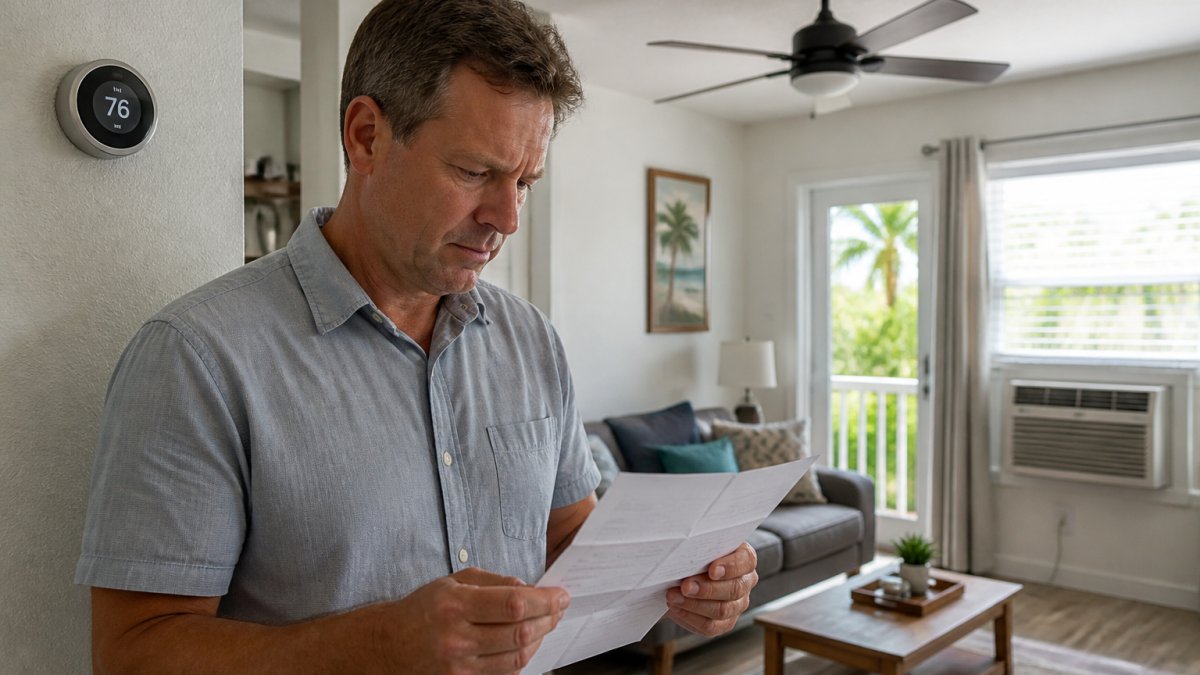
Your bill is measured in kilowatt-hours (kWh), and your rate decides what each kWh costs. Fixed-rate plans lock that price, variable-rate plans move with the market, and time-of-use rates charge more at peak hours. Knowing your plan is the first step to cutting your utility bill.
Ways to Save Electricity at Home That Actually Move the Needle
The best ways to reduce electric bills start with the biggest energy hogs, not the smallest. Focus on heating and cooling first, then hot water, then appliances, that order delivers the largest energy savings for the least effort.
1. Adjust your thermostat. Set it a few degrees warmer in summer and cooler in winter on a schedule; every degree trims cooling costs.
2. Maintain your HVAC system. Replace the furnace filter on schedule and book a yearly tune-up before summer.
3. Seal drafts and improve insulation. Weatherstripping and caulk are cheap fixes for air leaks, and better insulation keeps the cool in and the heat out.
4. Turn off lights and switch to LEDs. LEDs use far less power than incandescent and CFL bulbs, and turning off lights in empty rooms is simple and works.
5. Unplug electronics and cut standby power. Vampire appliances draw power even when off. Use power strips and unplug electronics you rarely use.
6. Run appliances efficiently. Only run the dishwasher and washing machine with full loads, and air-dry dishes when you can.
7. Wash clothes in cold water and line dry. Cold-water washing saves the energy spent heating water. Line drying beats the clothes dryer on a sunny day.
8. Cut hot water use. Lower your water heater setting and take shorter showers. Hot water is a hidden cost on every utility bill.
Renters who can't make permanent upgrades should focus on free moves: thermostat habits, unplugging electronics, cold-water washing, and portable LED bulbs. In a hot climate, shade sunny windows and run ceiling fans to take pressure off the air conditioning.
| Priority | Action | Effort | Likely Impact |
|---|---|---|---|
| 1 | Adjust thermostat and schedule | Low | High |
| 2 | Replace furnace filter, tune HVAC | Low | High |
| 3 | Seal drafts, add weatherstripping | Medium | Medium-High |
Why a Home Energy Audit Beats Guesswork
A home energy audit replaces guesswork with data. An auditor reads your electric bill, measures your electricity usage, and pinpoints where your energy consumption actually comes from.
Most homeowners guess wrong, swapping bulbs while the HVAC system and hot water quietly drain the budget. An audit shows the biggest wins first, so your monthly savings land where they count.
Solar Power Auditing offers a no-obligation, free home solar audit. We review your roof and electric bills, then deliver a customized system design and written quote with projected savings, an honest assessment of whether solar makes sense for your property. If it does, your project goes to only one licensed local installer, never a list, and we handle the paperwork, permits, and installation.
Curious what the process looks like? See how a free solar audit works. Ready to start? Get your free home solar quote and tell us about your roof and bill. Questions about quotes, roofs, or financing? We give straight answers before you commit.
Frequently Asked Questions
What runs your electric bill up the most?
In most homes, heating and cooling take the largest share of electricity usage, followed by water heating, appliances like the washer, dryer and dishwasher, and lighting. Standby power from plugged-in electronics adds a smaller but constant slice. Reading your utility bill and comparing monthly usage in kilowatt-hours (kWh) shows which seasons drive your costs, and a professional home energy audit pinpoints the biggest contributors in your specific house before you spend money on fixes.
Can solar panels reduce my electric bill?
Yes. Solar panels generate electricity on site, so you draw less from your utility and your monthly bill drops. How much depends on your roof, shading, electricity rate and usage habits. A free solar audit gives you a customized system design and a written quote with projected savings based on your actual bills, so you can see the numbers before committing. One homeowner saw her bill go from $300.31 to $0.00 after installation.
How do I find out whether solar is worth it for my home?
Start with a home energy audit to confirm your usage and rate, then get a solar assessment that accounts for roof condition, shade and orientation. A transparent provider will show projected savings with the assumptions behind them, not just a headline number. If your roof is aging, ask whether roof replacement can be bundled. A no-obligation audit from Solar Power Auditing details your project to one licensed local installer and gives you a written quote to compare.
The real challenge isn't knowing which habits save electricity. It's knowing whether your home has a bigger opportunity hiding in plain sight. Solar Power Auditing helps you find out with a free, no-obligation audit, a customized system design, and a written quote with projected savings, all backed by licensed local installation and full permit handling. Get started with Solar Power Auditing and turn those high electric bills into real, lasting savings.